Kelly McGinnis: “Horses Are Very Good at Keeping Me Humble”
By Kelly McGinnis | July 20 2026
After a long career in corporate communications, including more than 12 years as Chief Communications Officer at Levi Strauss & Co., Kelly McGinnis was used to being good at hard things. Then she returned to riding in her 50s. Horses, it turns out, had other plans.
I like being good at things. I am not good at this.
Horses have been unusually committed to making that clear.
I retired earlier this year after a long career in corporate communications. I worked with people I admired, got to be part of work that mattered and spent many years doing a job I genuinely loved.
I was also very good at letting it consume my life.
I am extremely good at being busy. I can multitask during a meditation class. I can answer an email while listening to a meeting, making a dinner reservation, and worrying about something that has not happened yet. For a long time, I considered this a strength.
Eventually, I began to suspect it might not be the thing I needed to keep honing.
I was not nearly as good at making time to be outside. Or being truly present. Or maintaining my friendships. Then I started riding again in my 50s, and horses made me aware—often painfully so—of how important all those things were.
I wanted to make more room for my life and my family, and I had the privilege to be able to do that. So I made the very scary decision to retire.
Riding did not cause the decision exactly. But it clarified it.
****
Riding started as a pandemic hobby and then, as these things apparently do, became a way of life.
I grew up taking group lessons in a town outside St. Louis. We had backyard horses, although my dad did most of the actual work—a distinction I did not fully appreciate at the time. After I left for college, I still thought of myself as a horse person, despite the inconvenient fact that I pretty much did not ride again for 35 years.
For the first 20-plus years of my career, everything was billable hours. Then I had children, and between work, travel and parenting, there simply was not room for much else.
The pandemic reset some of that. Life slowed down. Things that had always seemed impossible suddenly became possible.
My daughters started taking riding lessons, and one day, while sitting outside the ring, I asked whether there was a horse I could get on.
There was one lesson horse. He was about 20 years old, a retired national hunter champion and, in hindsight, far more qualified for the job than I was.
I started taking lessons and quickly got a feed lease. Within a few months, I bought a warmblood and went to my first show at Desert International Horse Park.
A little crazy, in retrospect. But I was so grateful to be there.
I also know that returning to horses this way—owning, showing and having the means to pursue it seriously—is an enormous gift. It let me compress years of access into months. It did not compress the learning.
Because I had missed the childhood years of learning equitation and fundamentals, the thinking was essentially that we were not going to try to do all that now. We would go with the jumpers.
At the time, this seemed both efficient and completely reasonable.
For a long time, speed and nerve carried us through. I went from the .70s to the .90s in that first show and was showing in the meters not long after that. I could hold on, turn and find the other side, and the horse handled much of what happened in between. Often, that was enough to win a blue ribbon.
It was also enough to convince me I was progressing much faster than I actually was.
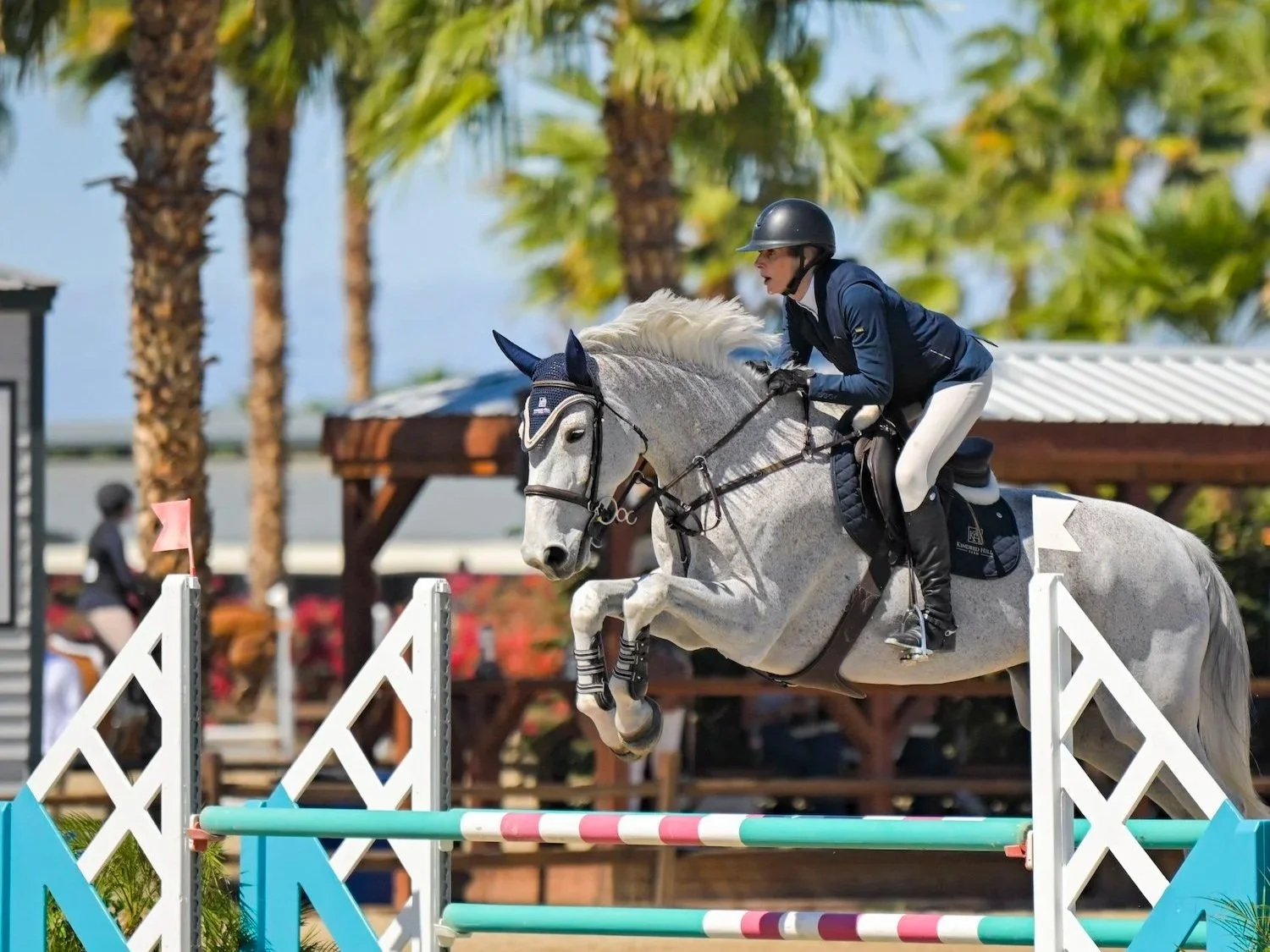
Eventually, when I moved up to the meter tens, speed and nerve were no longer enough.
I started falling off.
Regularly. And creatively.
After three emergency room visits in one year, my husband said, “We have to stop.”
I understood his point. Three emergency room visits were not a charming sign of commitment. They were frightening—to him, to my daughters and, if I was being honest, to me.
They were also evidence that something had to change.
Quitting was one option. So was stepping back, reassessing the horses, the training and my own preparation—and becoming willing to move much more slowly.
****
I have a spreadsheet with every class I have ever ridden, complete with notes on what happened, what went wrong, what went right, and what I should have done differently.
Of course I do.
The spreadsheet made one thing very clear. My racing-around strategy worked surprisingly well up to a certain point.
And then it did not.
So I changed barns and began the humbling work of going back to learn the fundamentals.
My trainers, Heather and Kylee, have been patient enough to insist on the basics and honest enough not to let me confuse courage with competence. They have taught me to slow down, pay attention, and ride the horse I have on the day.
There really is no shortcut. That has been the big lesson of the last year and a half.
This did not mean I immediately stopped falling off.
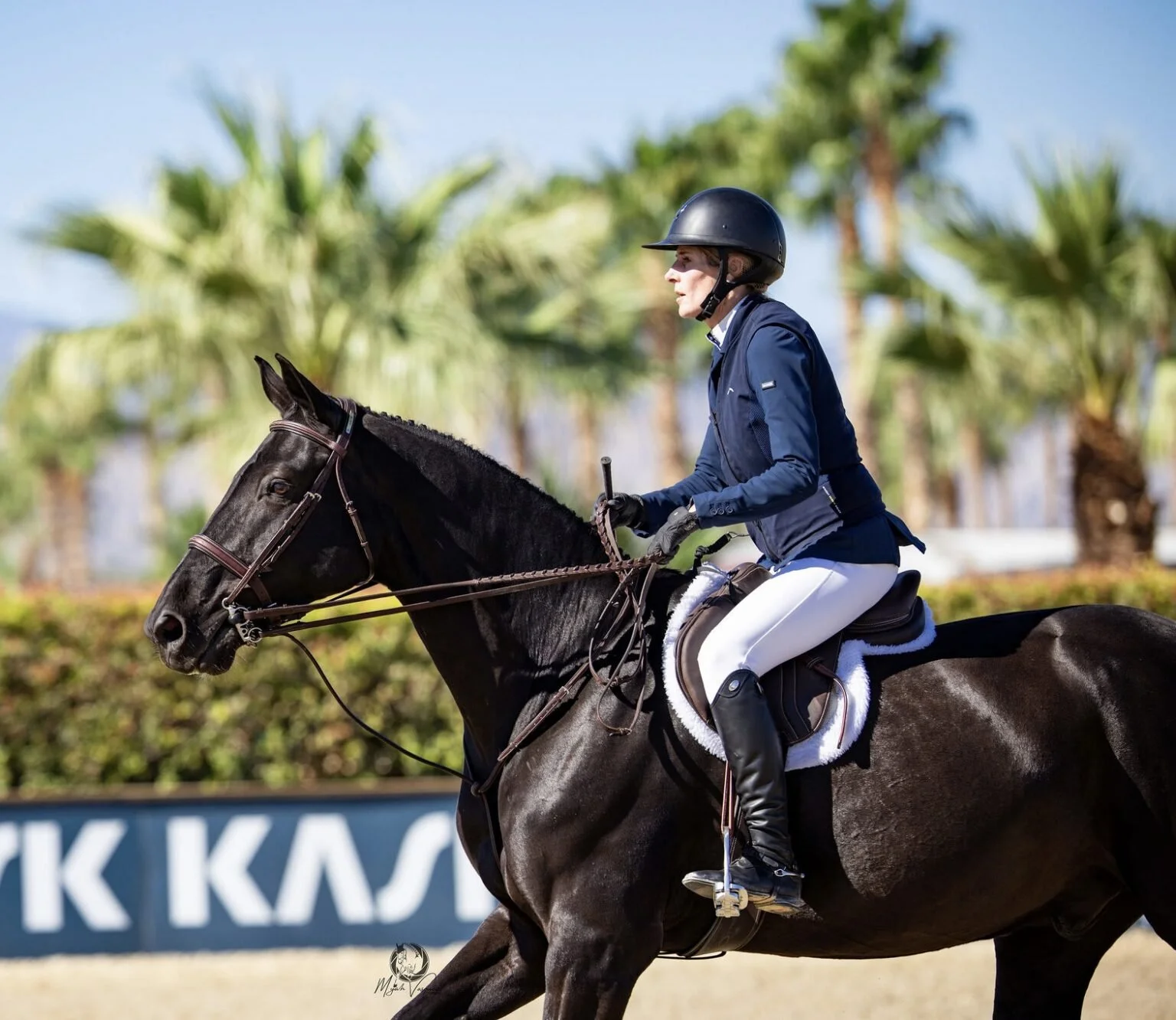
Last year, at Sonoma, I was riding my super-solid equitation horse Justin. I managed to take a flier. We made it over the fence, and then I forgot to tell him which way we were going. I went left. He went right. My air vest inflated, and I literally rolled under the arena fence, down the hill and out onto the dirt.
Progress, apparently, is not linear.
****
I can project confidence and sound more certain than I feel in a lot of parts of life. People are generally kind enough not to call attention to the gap. Horses are less concerned with social graces.
You cannot just perform the box breathing. You have to actually bring your breath down.
With Justin, if I enter the ring tense, the most sensible horse in the world suddenly wants to rush. If I am actually present—not telling myself I am supposed to be present and this is what presence looks like, but actually there—he settles. It changes who he is.
Horses are inconveniently revealing that way. They make certain things about you very hard to ignore.
I tend to know the mechanics. I am a good student. I understand what I am supposed to do. I can think about all the things. The harder part is making it real.
Being distracted, overthinking, and trying too hard are apparently three strategies I rely on often. They do not work with horses.
So much for my personal brand.
Horses also gave me a community I did not know I was missing.
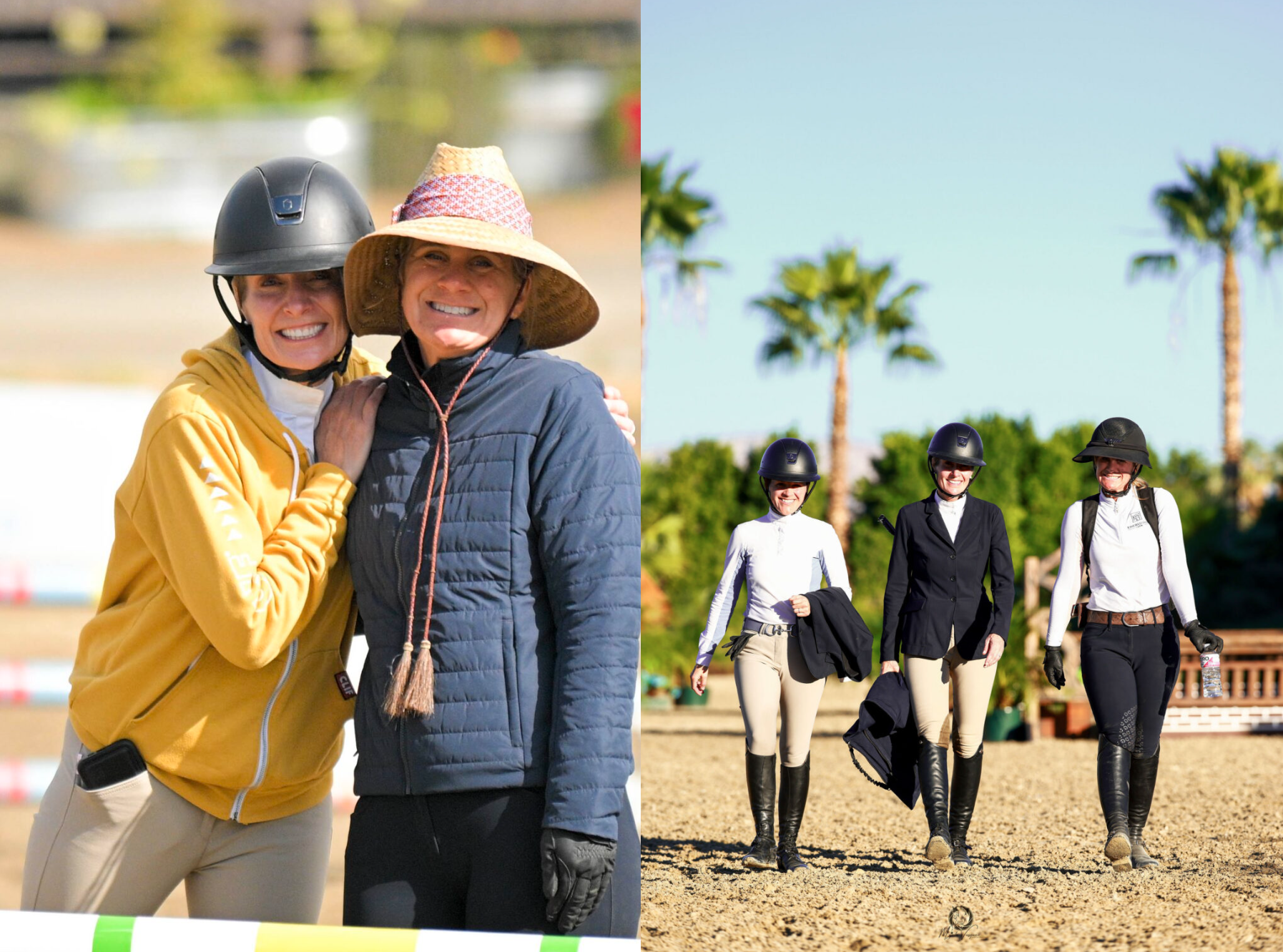
The barn has brought me friendships with people I never would have met in my professional life—women who are funny, exacting, generous, wonderfully irrational about their horses, and entirely willing to spend a whole lunch discussing how to manage a right drift.
I love that.
****
I did the math on the 10,000-hour rule.
I am not going to make it.
I am too old.
Not going to happen.
And that’s tough because I like being good at things, and this sport provides almost daily evidence of the distance between getting around and actually doing it well.
Accepting that—and learning to celebrate progress rather than imagining myself as a middle-aged prodigy—has been very good for me. It has made me more patient, somewhat less certain, and, on a good day, better able to laugh at myself.
My family may dispute the consistency of these improvements.
There are, however, two things about this journey that remain deeply annoying.
The first is that the harder you try, the worse you get.
Infuriating.
The second is that you cannot really do reps.
In most sports, when you are bad at a skill, you repeat it until you are less bad. Horses do not consent to being used as a drill machine. They have bodies, brains, and opinions of their own, along with a very low threshold for your personal development plan.
The bargain only works if their well-being matters more than your timetable.
You are trying to improve without making your horse carry all of your ambition, frustration and anxiety. It is really a study in managing your own nervous system.
Sometimes I am deeply frustrated. Sometimes I am really proud of myself. Horse shows are all high highs and low lows, and apparently so am I.
But I feel like I am working hard. I am learning from people I respect. I love the sense of belonging. And spending a few hours outside most days has changed my life in ways that are both meaningful and very ordinary.
No one at the barn cares what my title was. My horse certainly is not impressed by who I know. He wants to know why I pulled when the distance was right there.
“Why were you pulling?”
Fair question.
Learning to give myself over to something new—and loving it despite the fact that I may never be great at it—has changed me more than I expected.
I still overanalyze every round. I am still very much the person who texts my trainer hours later and says, “On that third turn, I should have…” I still wish I were better. I still have days when I cry.
I am not alone on that one.
But I fall off much less often now.