Kevin Babington: “I don’t want people feeling sorry for me”
By Kevin Babington | June 10 2026
I remember everything about the day of the fall.
It was Hampton Classic week. I had two horses in the Grand Prix qualifier. Shorapur had won the Hampton Grand Prix three years prior. Super Chilled I was just moving up to the four star level. Both horses were on a really good roll.
When I came out of the class on Super Chilled I said to my groom, “I wonder if I should just plan on jumping him in the Grand Prix?” Shorapur didn’t feel herself in the other class she did that week. But then I thought, Ah, I’ve won it on her before and she was actually quite difficult then early in the week. l’ll make a decision after I’ve jumped both of them.
The warm up went really well.
The first line of the course was down the hill towards the ingate, oxer–vertical. It was eight strides. And then you had a difficult rollback to a big oxer, and it was eight forward strides to a combination—oxer, vertical, vertical. I watched a couple of horses in front of me and the two stride looked really, really short. So I wanted to get a good oxer in to get as close as I could to the vertical so I’d land shallow and have room for the two strides.
That was the plan anyway.
I’m not sure if Shorapur hung up over the oxer in the combination or if it was the shadows, but when I landed from the vertical and I sat up, she just picked up in one stride.
I remember both of us going down. Then I hit the ground—I remember that clear as day.
I’d had plenty of falls, and normally I’d jump up. It’d take a lot to keep me down.
But when I tried to move my legs, I realized I couldn’t. The paramedics came in and I said, “Don’t move me, something’s not right.” All I remember is it felt like my arms were stuck in the air. They weren’t, but I kept asking, “Can you push my arms down? Can you push my arms down?”
Missy Clark and John Brennan came running into the ring. My groom passed the other horse off to somebody and she came in. A couple of good friends, Colm McGuckian and Michael Winters, came in. I said “Guys, I don’t think this is good.”
Normally I’d be very positive.
I was medevacked out of the ring and as the medics were loading me into the helicopter, they were in a rush and hit my nose on the thing. I remember saying to myself, You’ve got to be f*cking kidding me. It’s funny what your mind holds on to in those moments.
But the whole time I’m thinking they’ll get it sorted out. I was hoping my body had just gone into shock or something like that.
****
To really tell this story we have to rewind a minute. To Tipperary County, Ireland. 1968.
I’m the youngest of 11. There’s a 20-year gap between my eldest sister and myself and a five-year difference between myself and Siobhán, the second youngest. Like my mom was 42 when she had me and my dad was quite a bit older than my mom, so I definitely wasn’t in the plans.
But it was a beautiful upbringing. We were a very close family, and for Irish people, I think we were very affectionate.
None of my siblings were into horses when I started. A lad I went to school with mentioned something about riding lessons and I tagged along to watch. I think I was nine at the time. I fell in love overnight.
It was around that same time I watched a donkey derby—it’s this chaotic kind of race with kids on donkeys. They looked like a blast! So I bought a donkey. Fred. It shows you how little I knew. He was three years old, right? He was still a stud. I bought him for 10 pounds.
We walked that donkey from the other side of town to our farm. It took forever. It took us about an hour to get it across the bridge. And when we got to this parking lot area, it would not lead. I had to leave the poor donkey in the back of a friend’s hotel overnight until my brother could come with a trailer the next day.
The next morning I had everybody including the drunks in town giving their two cents on how to load this donkey. We ended up carrying it on.
I kept it on a few acres my brother had.
I would get on Fred and I would boot him over crossrails. He would grab the bit and take off and try to run me into the shed, so I’d have to bail out. Then I used these 55-gallon drums and put wood across to stop him from running into the shed. He’d get there and he’d duck his head and run under it and I’d have to bail. He was trying to kill me at every point.
I probably had him for six months before I advertised him for 15 pounds, the little dealer in my blood. The farmer and I went back and forth. He shook hands on 12 pounds. I think my mother gave him 12 pounds to take it away. I honestly do. But I took that money and I bought a riding helmet.
****
I was 19 when I came to America.
I knew after I finished high school that I wanted to make a career out of horses. I didn’t think I could do it show jumping or eventing so I applied to do a stud and stable husbandry course in the Irish National Stud, thinking I’d get a job working at like Coolmore Stud. I ended up taking the British Horse Society Assistant Instructor course, which is all about riding instruction. It was brilliant. I discovered I had a knack for teaching.
One afternoon we were all called in for a meeting. This lady was recruiting for a summer camp in Colchester, Vermont. She needed one riding instructor and one barn manager and I had no intention of going.
None of us did. She’s telling us all about it, and nobody’s putting their hand up for interest.
“Boys,” she said, “it’s an all-girl summer camp. There’s gonna be 250 girls and there’s very few boys there.”
So, I look over at John Brennan and he looks back at me and we both put our hands up in the air. That’s how I ended up coming to America, with no intention of staying.
****
At 21, I got a notion to start my own business. I spent two and a half years working for Frank Chapot and had been dating Dianna, my later wife, for six months. She just was as passionate about horses as I was and she wanted to see Gem Twist. I think that was how I was able to hook her in.
We rented a barn in Ringoes, New Jersey and started off teaching till 10 o’clock at night.
I used to buy inexpensive horses and produce them and I’d end up having to use them in lessons. I couldn’t afford to have lesson horses and sale horses. It was the best thing ever because it really was a good test to see how the horses managed with amateurs and luckily enough most of the riders that I attracted were advanced enough.
Dianna and I ran the whole thing together ourselves.
We started to accumulate more and more horses on training and a lot of freelance teaching. We ended up buying this horse called Tornado that really brought me up through the ranks. In ’95, we were National Grand Prix Horse of the Year. It was very fast riding, right? It was competitive. So that kind of got me off the ground.
Then Saly Glassman—she had started to ship in a couple of horses every week—bought Cruise Missile and we’d share him. That horse was an absolute winner. I started him at 1.20ms, and he ended up being just a super Grand Prix horse.
She mentioned that if another horse comes along like that, she’d be interested. Wouldn’t you know, Eamonn Hughes—he had found me Cruise Missile—tipped me off about this amazing horse in Ireland that he had tried as a five-year-old and just came on the market.
I went on a Monday and tried him. I had never experienced scope like it. But he was strong, he was very strong. So I said to Sally, “Look, I love the horse. He’s got all the scope, all the ability. I think he’s definitely gonna be a Grand Prix horse. For some reason, if he doesn’t work out, we’d sell him.”
That was Carling King.
Sally rode him for a while. He was just very, very strong, so I started riding him more and more and we started to figure out, God, this is a serious horse.
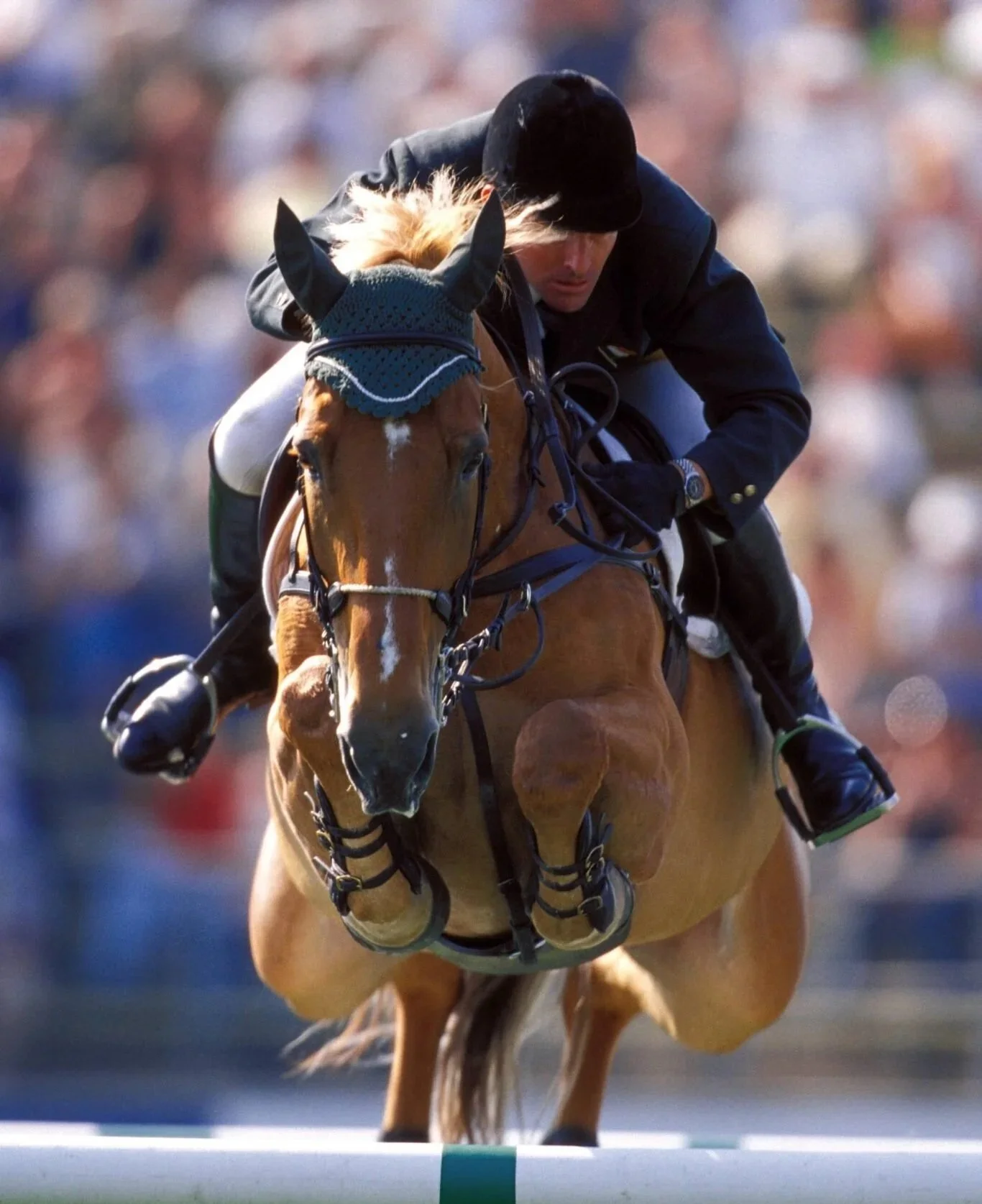
Kevin Babington & Carling King. ©IMAGO / Thomas Zimmermann
****
I was 32 the first time I went back to Europe to compete.
I jumped the Grand Prix at Saugerties, NY with Carling King—they built it really big back then—and the course designer, Paul Duffy, said, “This is a serious horse, have you thought about reaching out to get on the team?”
So I spoke to Tommy Wade, the chef d’équipe, and somebody else in the federation and they said, “Look, we can’t just put you on a team but come to Europe and try to get into some shows.”
I thought, Ah, I’ll land in Europe and I’d be able to go to all these fancy shows!
I ended up bringing Carling King and Cruise Missile over. We had to save up every penny we could to pull it off.
I put my name in for this show and that show and the shows are all full. I was getting really frustrated. I did a couple of national shows and one particular show Carling King won the Grand Prix and Cruise Missile won the welcome class.
Somehow Eddie Macken heard about Carling King. I always looked up to Eddie, every rider did in Ireland, but I didn’t know him when I made that call.
Eddie goes, “I’ve heard good things about your horse. Do you think it would jump the Nation’s Cup at Aachen?”
That’s the Wimbledon of Germany and, cocky me, I’m like, “Yeah, definitely.”
I didn’t even have a team coat. Eddie said, “Don’t worry about that. Just get here.”
****
Aachen the first time, I mean, my eyes were popping out of my head seeing Ludger Beerbaum and Otto Becker, all these people I admired.
Eddie had a horse there, but he said, “Look, there’s a good chance if your horse goes well the first day, I’m not going to do my horse.”
And he stuck to his word.
I ended up making my Nations Cup debut at Aachen wearing Eddie Macken’s jacket. He’s taller and broader than I was, but I rolled up the sleeves and pinned a few buttons here and there. It’s like a dream come true, right?
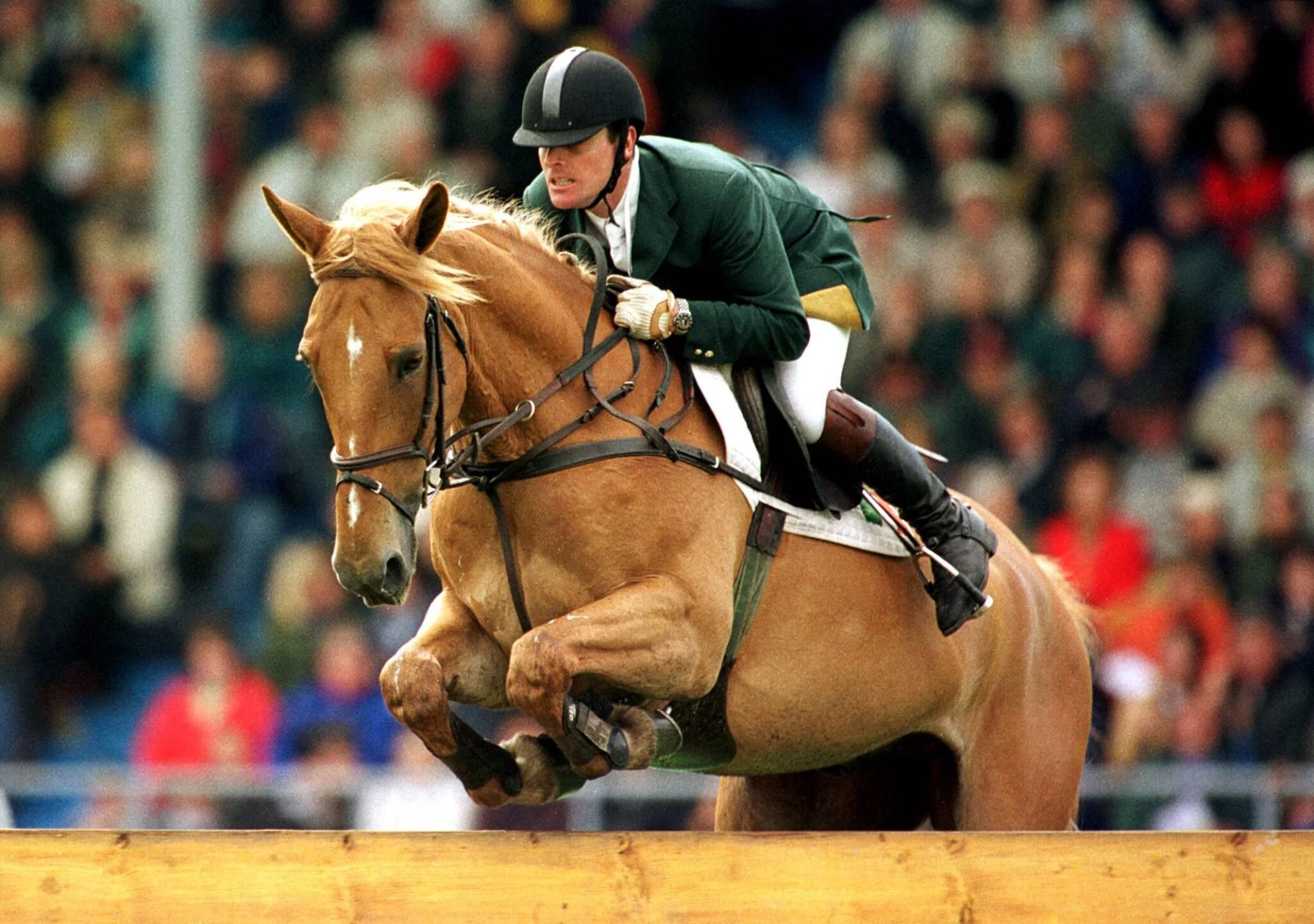
Kevin Babington & Carling King, Aachen 2000. ©IMAGO / Uwe Kraft
I had one down in the first round of the Nations Cup and then he ended up jumping clear in the second round. I was over the moon. Dianna was very emotional too. This is a huge deal for us.
Then Tommy Wade reached out to me and said, “Can you come to Hickstead?”
So I said, “Of course.”
And Carling King was good again.
He was good the first day and for some reason they put me as the fourth rider there. Jesus. Nothing like pressure, right? We ended up winning that Nation’s Cup and it hadn’t been won by an Irish team since 1937. So we broke the jinx. It was the most amazing experience.
Now I’m all of a sudden starting to have really, really good results.
Back then, I was a hungry rider. I used to ride to win. But Carling King, if you rode to win, he got way too strong. Cruise Missile and Tornado, you could fly around on them. But Carling was an amazing Nation’s Cup horse.
I went to Dublin after Hickstead. The Dublin team had already been pre-picked, but I got to jump all the other ranking classes on both horses. They were both really good, and then Tommy is like, “Okay, you’re part of the A team.”
At that time, Cian O’Connor was just starting off. Dermot Lennon had a great mare, Liscalgot. Peter Charles had a couple of really good horses. Jessica Kürten. That was sort of the main group of riders. We got to do all the big shows around Europe and we’re winning Nations Cup after Nations Cup. That year Ireland won ten Nations Cups, which was a huge record.
I remember winning Rotterdam and walking around with Jessica and she said, “Just so you know, this is not normal. Just don’t take it for granted, really enjoy it.”
And I’m like, “Don’t worry, I’m really, really enjoying it.”
****
I was 35 when I jumped the Athens Olympics.
The four years leading up to it were a blur. I got to jump at the 2001 and 2003 European Championships. In Donaueschingen 2003, myself and Steve Guerdat were the only ones to jump double clean in the Nations Cup. Ireland didn’t win that day. But it qualified us for the Olympics and Ireland hadn’t qualified in quite some time.
In between, we did the 2002 World Championships in Jerez de la Frontera, Spain, and Carling King was eighth in that individually and double-clear in the Nations Cup.
Heading into the 2004 Olympic year, he won the last two Grand Prixs in Florida, which would have been nowadays the five-star Grand Prix. And then I took him to Europe, and the first show we jumped him in, La Baule, he didn’t jump well in the Nations Cup. I almost pulled him out of the second round. I think he might have had three down, but then he was colicky that night.
I nearly scratched from the Grand Prix and he comes back out and wins it. I did this crazy inside turn to a triple bar. I think maybe two others did it and there were all these great riders. The top three was myself, Ludger, and Michael Whitaker. I’m standing on the podium next to these guys, winning my first five-star at one of the biggest shows in Europe.
I think we were part of a couple of Nation Cup wins after that. And then, I went through a phase where he jumped the worst couple of weeks and I was like, Oh my God, I’m jumping myself off the Olympic team.
They wanted me to go to another event, and I said, “Look, the horse needs a break and he could do with being treated a bit.” But it was like a fine line. I only had one or two shows to kind of prove myself before the final team was named. So I was just in a panic.
When you gave Carling King time off, he’d come back like a bull in a china shop. The main thing was getting him relaxed and rideable enough, but still keep the fight in his belly and he didn’t lack fight in his belly. The relaxation was maybe the more difficult end of it.
He jumped really well in his next show and Eddie Macken, he’d taken over as chef d’equipe, he took a chance with me and named me to the team.
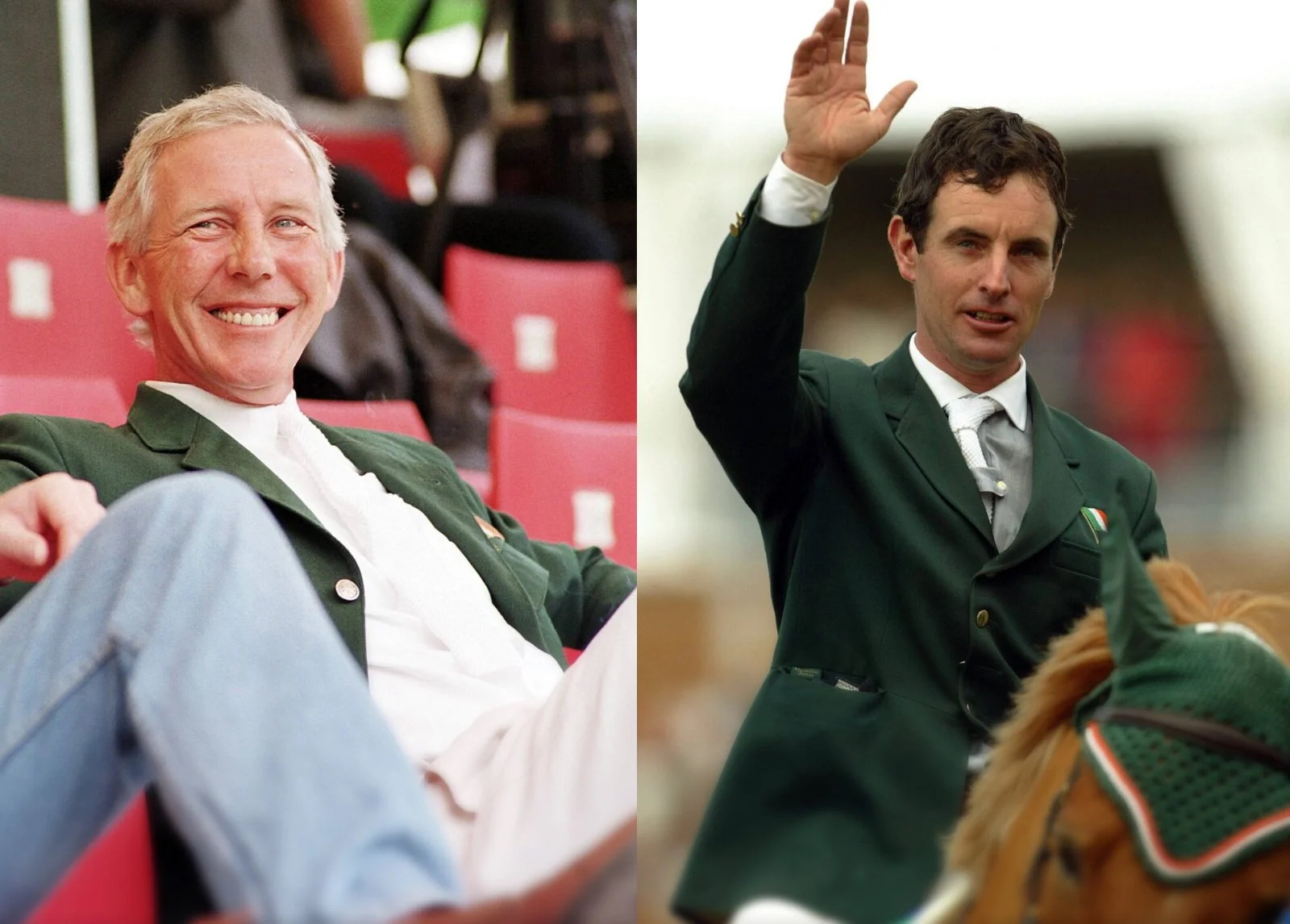
Eddie Macken. ©Imago / Rau Springreiter, Kevin Babington, 2004 ©IMAGO / Panoramic
I wouldn’t consider myself a nervous rider, but you certainly do get your butterflies at the Olympics.
We ended up fourth individually.
I still remember the jump that put me out of medals. It was a skinny coin oxer. One of the most important things when you’re riding the skinny is to ride it like a wide oxer because horses will come down early and usually put a front toe on it. Carling King was getting a little strong and a little bit low and I thought he’ll never have the back rail—he had an amazing hind end. So I just rode the front rail and he tapped the back one.
But it was an amazing experience. Like if somebody had told me four years before that I was going to jump at the Olympics, I never would have believed them.
****
I was 50 when it all came to a sudden stop.
My family used to joke that we’re going to have to pull you off the horse to retire. Unfortunately, my retirement came too soon.
The saving grace is my whole family was into horses.
I had the accident on a Friday and the Monday before we left we were riding bareback and I was trying to teach my daughter Marielle how to vault up on a horse from the ground. When I was younger, it was a macho thing—we’d never get a leg up, you’d vault up. And this horse was 17.3 hands and I’m like a mermaid trying to get up on it.
Marielle used to play around with that all the time. They were all in, 100%. And they were all in on me after the accident.
Basically I had a contusion of the spine. It’s like a kink in a hose. There was no severing of the spine so the whole time I’m hanging on a bit of hope that once we get the pathways opened, I’ll get movement back. But step by step you realize, shit, it’s not happening. And you go into a bit of panic mode.
I was worried about how everything was going to play out.
We had the farm, and we had a house, and I also had a feed mill I was running. But so many people stepped up to the plate.
A lot of my friends said, “Look, we’ll help with any sale horses you have or any horses you’re carrying.” They all took them on the cuff. I was using a very good farrier at the time, Todd Meister and Miley Connors. The vets, everybody did their part. Nobody would charge me for anything. That was incredible right off the bat.
I’m very fortunate to have a very close-knit friend group. Maarten Huygens and Darragh Kerins came up with the idea for the foundation. And then Colm McGuckin and several others jumped on board and it grew legs overnight.
At first, the Kevin Babington Foundation was to help me out. Now it’s for the next person that comes along. I hope it’s very few that have to use it, but unfortunately we’re in a sport that’s somewhat dangerous.
****
It’s been six years since my accident.
I don’t want people feeling sorry for me because I don’t have such a bad life. I have my own van. I have a 24-hour care. I’m very fortunate in that way.
And I’m still working in horses. A lot of people in my position are just stuck in a chair and they can’t do anything whereas I’m teaching. During the season here in Wellington, I’m doing between four and six lessons every day.
Honestly, since I’ve been in my chair, I think I’m a better coach.
When I was riding, I had a lot of students and a lot of horses. I have no idea how I did it all. You’d be jumping off a horse to run and teach a lesson and then you probably weren’t giving it 100% because you were so busy whereas now I have the time. I can really take the time to break things down.
And I love it. There’s nothing better than seeing riders progress.
I think it’s made me a better horseman in some ways, too. I’m very understanding of a horse’s pain now. Because when you do the rehab, when you push through something, it’s extremely painful, so I think about how a horse is feeling when he’s back in work and stiff on one side.
I want people to know that I’m in a good place. I think I really brought a community together and raised awareness that accidents can happen to a rider at any level.
And I just love that everybody’s been there for me.
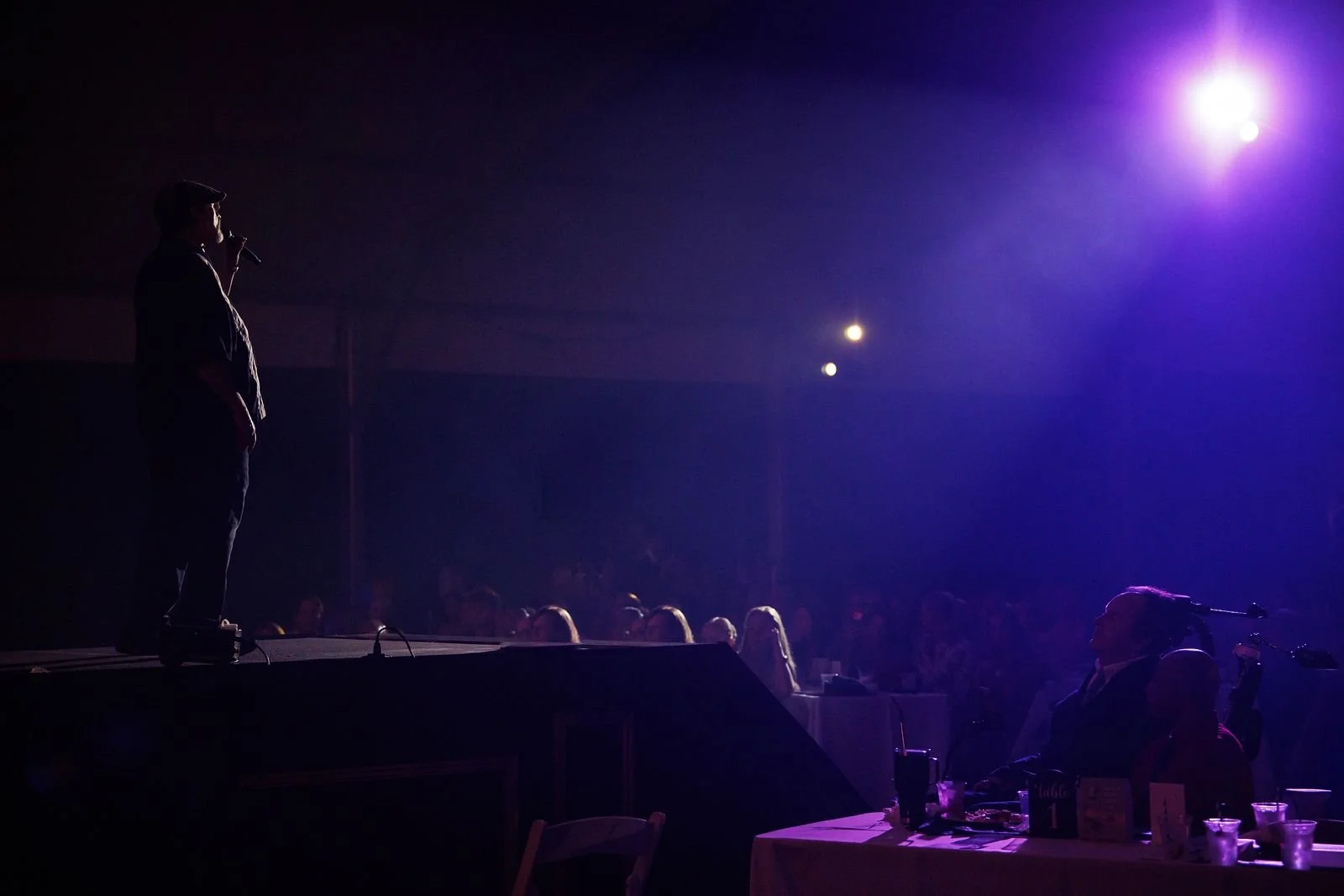
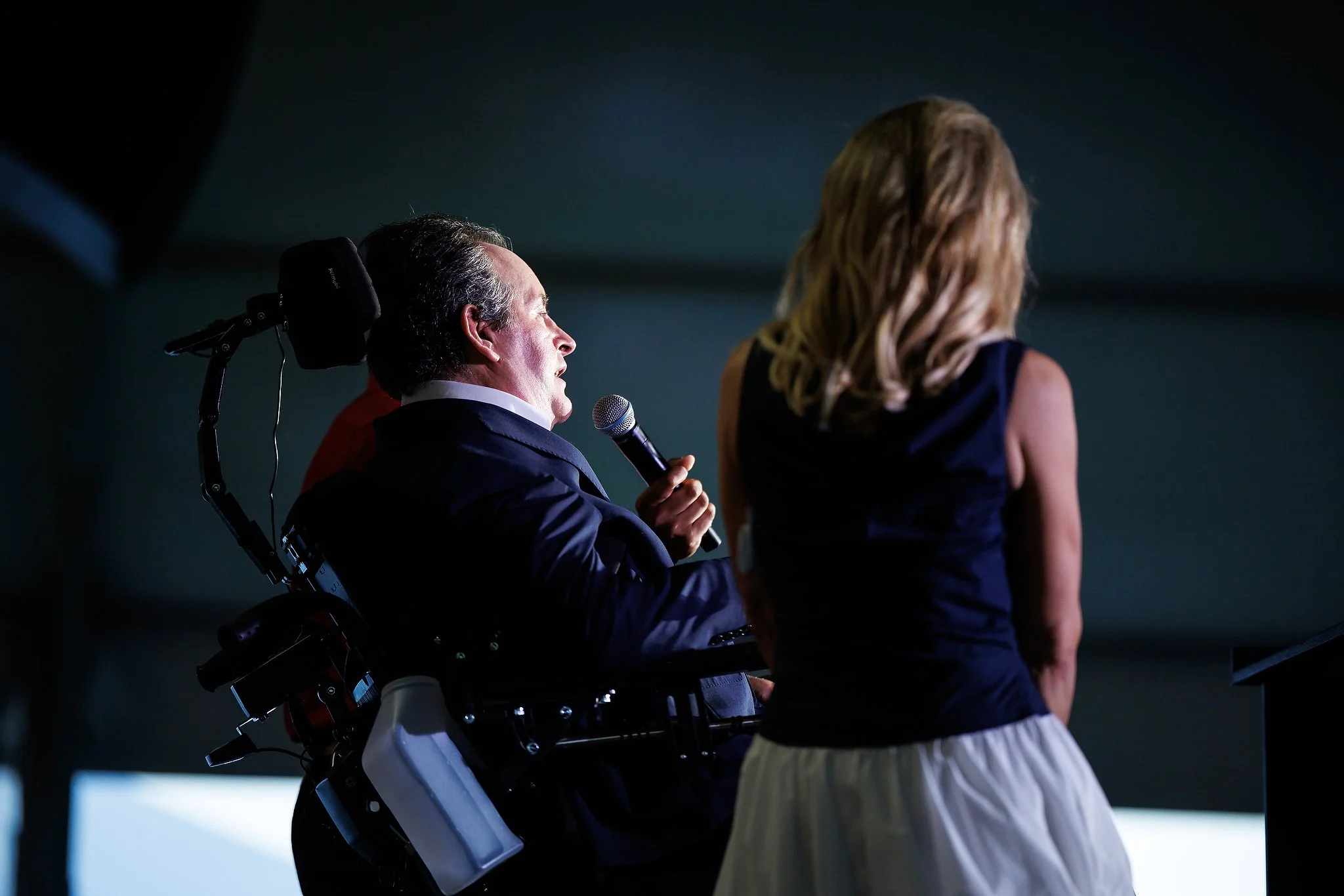
Kevin Babington Foundation fundraiser at EyeCandyLand. ©Shelley Paulson Photography