Sherie Wright: “Horses are our safe place”
By Sherie Wright | September 10 2026
Sherie Wright’s daughter was diagnosed with ulcerative colitis at age two. This is her story.
“We have to get her to Youth Nationals.”
That was all I could think.
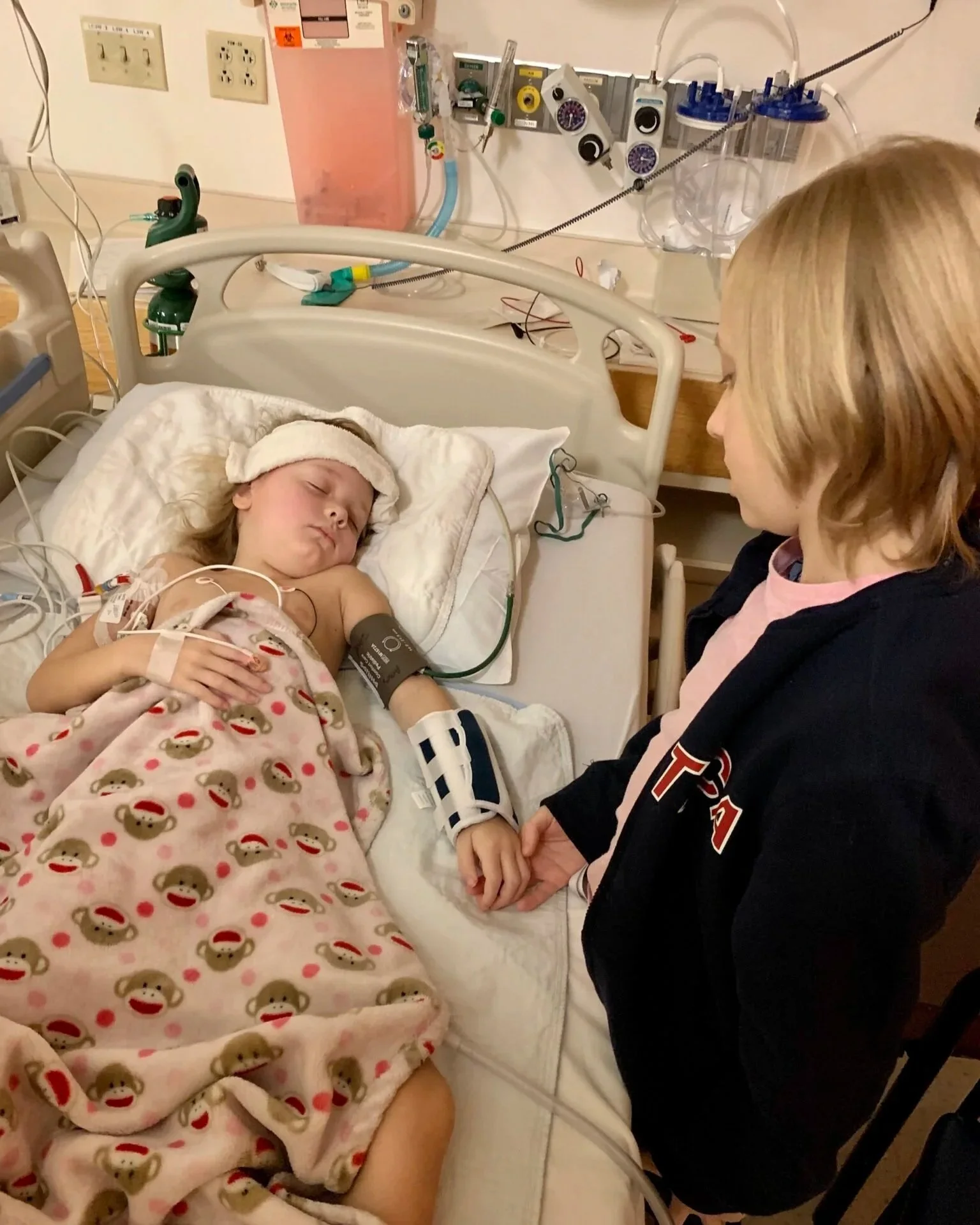
My daughter, Addison, was in the hospital. Again.
She’d had her colon removed the year before and was suffering from complications. Scar tissue had built up, causing a blockage in her small intestine. She needed another surgery—this time they had to cut her down the middle to untwist her small intestine. It took weeks for it to start working again.
And the timing was devastating. We had just re-leased her pony. She had qualified for Youth Nationals—a huge goal after her first surgery. And now, this.
Another setback.
After years of setbacks. Years of her health getting in the way of the things she loved. For Addison, it was soul-crushing. She was so defeated, thinking, I worked so hard for this. I deserve to go.
We thought the same thing, so we were determined to get her there—no matter what.
Addison ended up getting better in the nick of time. Her trainer came to our house while we were still at Boston Children’s Hospital. Over FaceTime, she packed all of her things into the trailer and sent her pony to Oklahoma.
We flew straight from the hospital to the competition.
It was crazy.
And then she won her championship class in Hunt Seat Equitation.
Looking back on it now, what was I thinking?

Addison was two years old when the first symptoms appeared. Blood in her diaper.
I have ulcerative colitis, so I knew what it might be. But as a mom, you don’t want to believe it. You think, There’s no way. You want to be in denial. But I knew.
And I dreaded the diagnosis because I also knew that the earlier the onset, the harder it is to treat.
The doctors confirmed it with blood work and a scope. They saw ulcers, bleeding, and inflammation. They took a biopsy to rule out cancer—thank God, it never was.
But right from the start, it was intense. At age two, they told me she would likely need her colon removed as a young adult due to the risk of cancer.
I was completely overwhelmed. It’s a heavy, heavy weight.
My own colitis was manageable with drugs. It was nowhere near what she had.
I remember walking out of that appointment feeling utterly distraught. How do I help my child? I wanted to cry, to break down—but you don’t want to look like you don’t have it together for them because they look to you to be strong. I remember thinking, I can’t let her see how upset I am. I can’t let her see that I’m weak or that we can’t handle it together.
Inside, I was falling apart.
I tend to internalize things. It’s not lost on me that it’s probably related to my own illness. But I’m action-oriented too. You have to be. So I immediately started researching the best pediatric GI programs in the country.
***
The years that followed were a blur. She was just a very unhealthy little girl, and we were trying everything to help her.
We tried the holistic route. I drove an hour south to pick up raw milk with natural probiotics to calm her gut. It worked within two days. Normal stools. She felt good.
Oh, this is a miracle.
But then it stopped working.
And that was the pattern for the next four years. We’d try something new, she’d go into remission for a while, and then it would fail.
She was on Remicade. Stelara. Biologics. She was on a drug called Tacrolimus that I had to pick up at a specialty pharmacy every week because it was meant for cancer patients. It made all of her hair fall out, but she felt better for a little while—until she didn’t.
The doctors had her on a mixture of antibiotics at one point, thinking a bacterial infection might be the root cause.
It was never ending.
None of these drugs were set up for children’s dosing, so the insurance company was denying all our claims. It was a constant fight.
And the whole time her quality of life was so compromised. She missed school. She missed activities. We spent a lot of time at home—tired, in pain with stomach aches, headaches. There were days where she couldn’t get off the couch. She would wake up exhausted. Her vitamins and iron levels were critically low because her body was fighting for her life.
When she felt good, though, she had so much energy. She wanted to be outside, with her friends, in the pool, at the barn. And then she’d pay for it.
Some days, she would throw up in the corner at the barn and still want to ride. She’d push herself, and we’d come home and she’d go straight to laying down.
The bathroom was a constant issue, too. We couldn’t go anywhere without a plan. I’d have to map out every toilet, because she’d soil herself if she couldn’t make it—it wasn’t her fault, she just couldn’t hold it. The last time we flew to Boston, I put her in a diaper at age six because I was afraid she’d have an accident on the flight.
At that point, we needed to get her off these drugs. She needed to live like a normal kid.
We knew we probably weren’t leaving Boston without the surgery.
And she was okay with it. I think she was tired of fighting too.
***
I spent two months at Boston Children’s with Addison. My husband was home in Florida with our son, and I was sleeping in a windowsill on an inset mattress.
The solution was to remove the colon—to get rid of the problem. The doctors told us, “We’re out of options.”
We had talked about it months prior; we knew it was coming. The surgeon sat me down and explained the process—the procedure, what it would look like after, how it would save her life and change her quality of life.
For years, surgery was my worst fear. I didn’t want her to have a scar. I didn’t want her to have a bag.
I worried about puberty. Would kids make fun of her? How would she handle having a bag with boys? All those teenage insecurities—my body is different, I have different needs.
But we were out of options.

The surgery took about 13 hours.
Waiting is the worst feeling. Your daughter is in someone else’s hands, and it’s completely out of your control. You just watch the screens and wait for the status to update.
They removed her colon and reconstructed an ileostomy on her lower abdomen. Because she was so young, a bunch of medical students came in to watch. A couple of them fainted.
But Dr. Zalieckas was excellent, and everything went well. It just took longer because she was so tiny.
And the result was miraculous.
Three days after surgery, she was running around the hospital halls. I was stunned. Why did we not do this sooner?
I had been so afraid of the surgery, thinking I was protecting her. And then I saw how good she felt, and I thought: Was I wrong all this time? I should have done this sooner.
***
Two months is a long time to spend in a Children’s Hospital. You’re grateful for the help, but you’re also aware of the much sicker children on the same floor. Kids who aren’t going home anytime soon.
You just keep telling yourself: This won’t be your life forever. We’ll get through this. We’ll get back to being a kid and going to the barn and doing what she loves best.
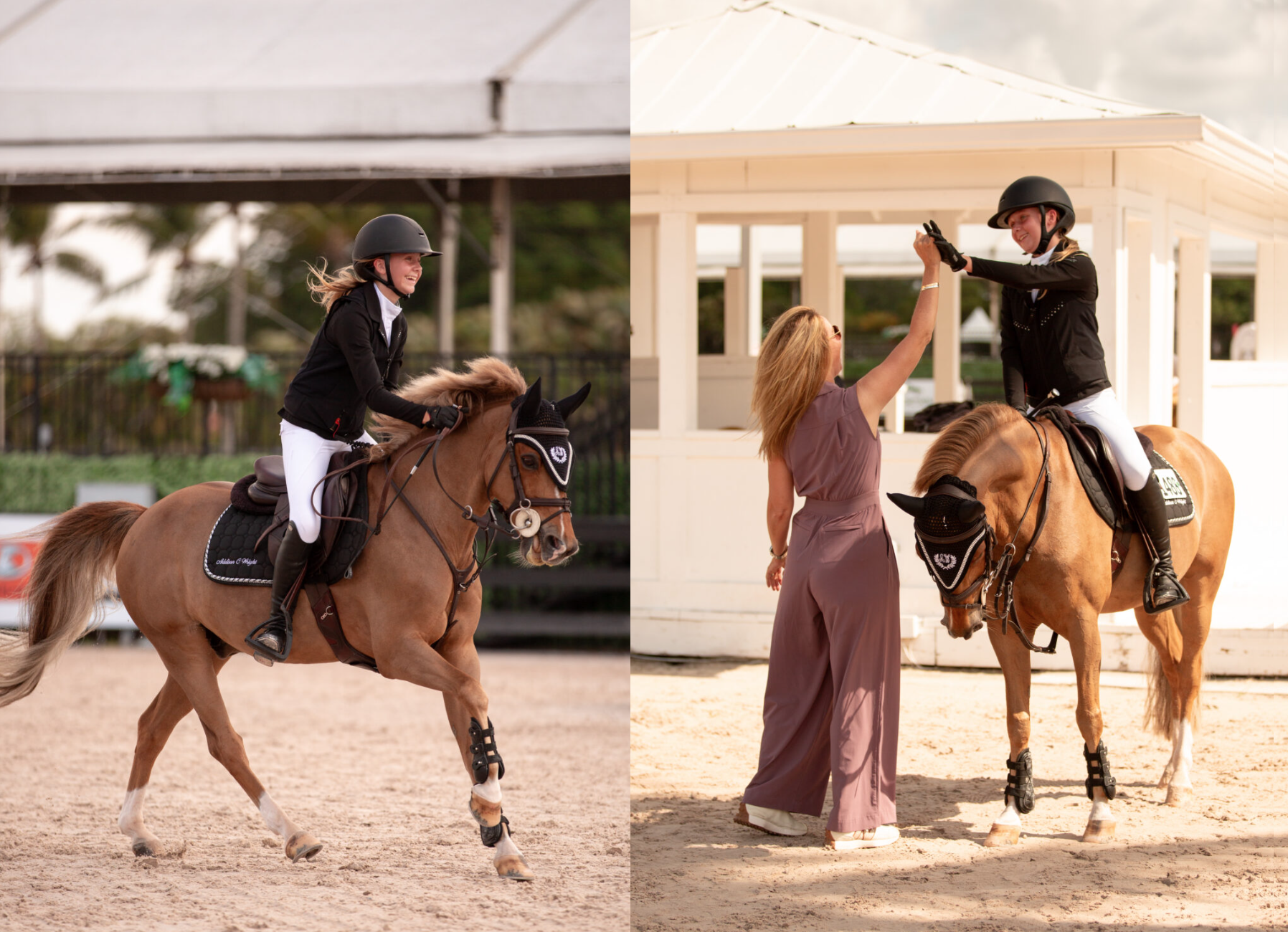
And we did. Eight weeks after surgery, Addison was back in the saddle.
We went all in on it. Now that she was feeling good, my husband and I were determined to nurture this sport. We leased a horse, and about a year later, a little pony named Jazzy. She got her through a lot.
A chronic condition is never fully in the rearview. Addison developed Crohn’s disease in her small intestine about a year after the surgery, and she started having seizures. Apparently, that’s not uncommon—gut problems and seizures often go hand in hand.
There’s no cure for either. Just band-aids. It’s a balancing act.
There will be more procedures, too. We’ve talked about a reversal surgery for the ileostomy. We’re not sure if we’re ready to go through that yet, but Addison wants it so she doesn’t have to have the device anymore.
Through it all, the horses have been everything. It’s been our sanctuary. Our safe place. Our happy place. And the equestrian community has been incredibly supportive. We’ve made wonderful friends. I’m so grateful for it all.
***
Addison is a resilient kid.
There has never been a time where she said, I hate my life or I can’t do this. She’s always had a positive attitude.
I look at her and I’m amazed. This kid is 12. I don’t know if I’d be able to get through what she has.
When she was in the hospital, I was more of a mess than she was. As a mom, you want to take your child’s pain away, and I couldn’t. The helplessness was tough. And seeing her feel defeated, like those weeks before Youth Nationals, was agonizing.
I would get angry—she doesn’t deserve this. But anger doesn’t help.
And she just goes with it. None of it bothers her. Up until six months ago, I did everything for her. Now she packs her own bag, goes to sleepovers, and changes her ileostomy bag by herself. She manages her epilepsy medication.
I’m so proud of her. Most kids don’t have to think about these things, and she’s just like, Whatever, I’ll deal with it.
She’s like that with riding, too. She just immediately resets when something goes wrong. It’s, “Okay, that sucked. Let’s try again.” This year she started in the pony jumpers. Her goal was to qualify for Pony Finals—and she did. She medaled. Individual silver.
It’s shocking to me. And inspiring. She’s shown me that I’m stronger than I think I am, too. And to never take anything for granted.